

The Basic of Minimally Invasive Surgery Course
22 to 27 Nov 2025
Motahar Curative Hospital successfully hosted “The Basics of Minimally Invasive Surgery,” a comprehensive scientific training program dedicated to the professional development of general surgeons, urologists, obstetric and gynecologic surgeons, pediatric surgeons, and thoracic surgeons, with an intensive focus on advanced laparoscopic techniques. Led by the distinguished Dr. Rahmatullah Athar, a renowned expert in the field, the initiative aimed to enhance clinical competencies by combining theoretical excellence with practical, hands-on insights. Participants explored sophisticated surgical maneuvers, patient safety protocols, and the integration of new energy sources in the operating theater, reinforcing the hospital’s commitment to remaining at the forefront of modern medical technology and improving patient outcomes through precision and innovation.
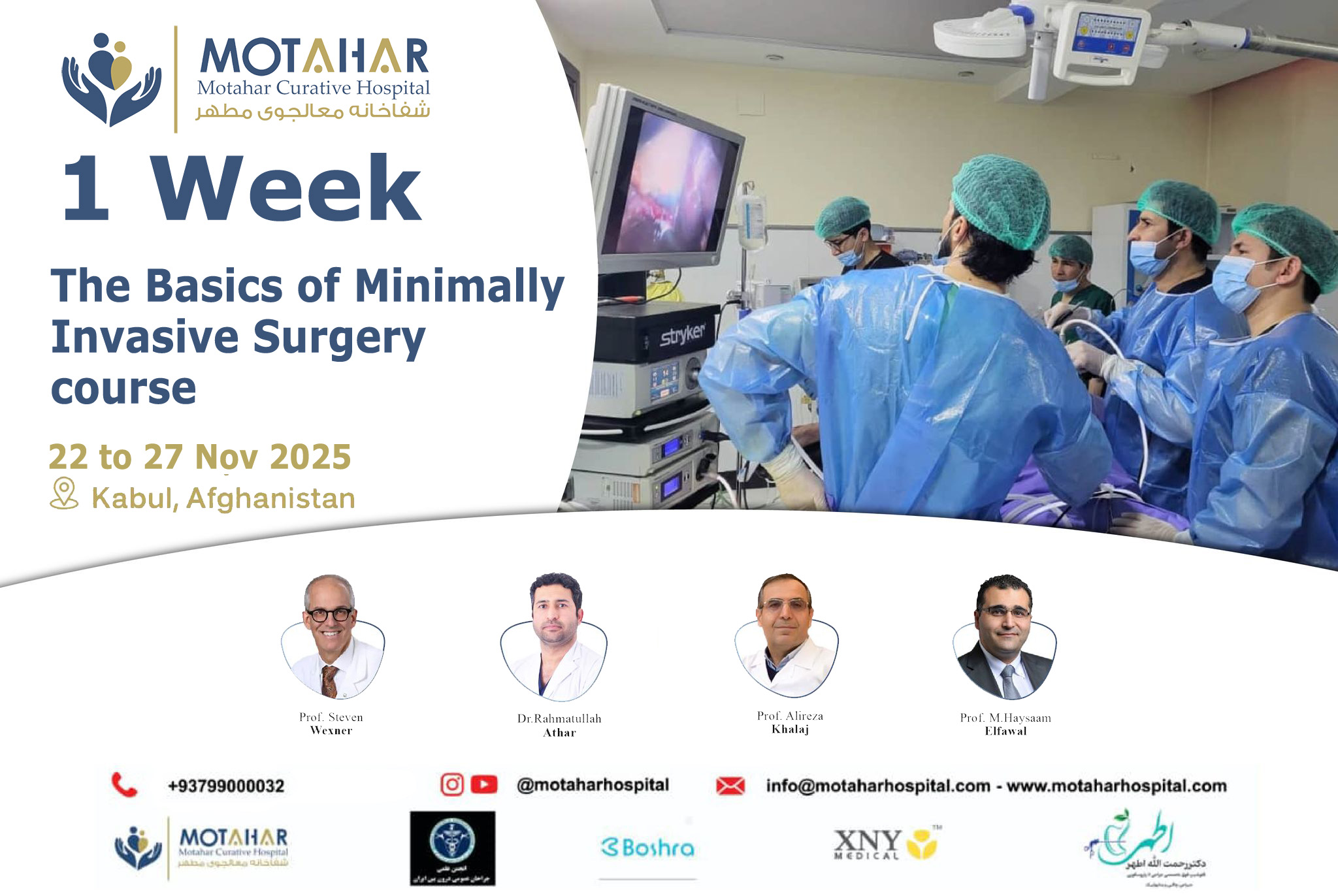
Laparoscopic Training Program Essential Course (1 week)
Objectives: At the end of this course the participants will be able to:
- Understand the laparoscopic principles including,
- Access, insufflation, positioning of trocars
- Exposure – dissection – stitching, tissue approximation, knot tying, stapling
- Diagnostic laparoscopy and management
- Basic principles of laparoscopic cholecystectomy
- Laparoscopic Appendectomy
- TAPP & TEP inguinal hernia repair
- Identify the indications and contraindications of laparoscopy.
- Understand the surgical and applied anatomy
- Be confident in starting laparoscopic surgeries and troubleshooting as an active member of the team.
Target discipline
- General Surgery
- Thoracic Surgery
- Urology
- Pediatric Surgery
- Obstetrics and Gynecology
- Oncological Surgery
A timetable of exposure in operation theatre varies day to day according to availability of patients
Theme | Objective | Content | Hands – on Training | |
DAY 1 | Introduction to Laparoscopy and Basic Skills | Understand foundational principles and equipment. | · Overview of laparoscopic surgery benefits, risks, and history. · Introduction to laparoscopic instruments: trocars, camera systems, graspers, dissectors, and energy devices. | · Setting up the operating room (OR) for laparoscopy · Basic camera handling and depth perception drills. |
DAY 2 | Surgical Anatomy and Port Placement | Review key abdominal anatomy and safe port positioning. | · Detailed review of abdominal and pelvic anatomy relevant to laparoscopic surgery. · Principles of port placement, including safe entry techniques (Veress needle, open technique). | · Simulated port placement and pneumoperitoneum creation. · Instrument Design Part I- Demonstration of Laparoscopic Hand Instruments. |
DAY 3 | Camera Navigation and Instrument Control | Develop proficiency in maintaining visualization and instrument handling. | · Understanding 0° vs. 30° laparoscopes. · Practice in maintaining horizon, preventing fogging, and avoiding “tunnel vision.” | · Coordination drills — object transfer, peg manipulation, and tissue handling. · Instrument Design Part II- Demonstration of Light Source, Light Cable and Electrosurgical Generator. |
DAY 4 | Basic Laparoscopic Procedures – Diagnostic and Biopsy | Perform diagnostic laparoscopy and basic tissue biopsies. | · Indications for diagnostic laparoscopy. · Biopsy techniques — liver, peritoneal, and omental. | · Perform a complete diagnostic laparoscopy on simulators or animal models. · Instrument Design Part III (Demonstration of Insufflators, Camera, Monitor and Ergonomics of O.T. setup of these instruments in Operation Theatre) |
DAY 5 | Laparoscopic Dissection Techniques | Master the steps of a laparoscopic cholecystectomy. | · Detailed breakdown of critical view of safety (CVS). · Managing adhesions | Hands- on Practice as an assistant . |
DAY 6 | Diagnostic Laparoscopy | Laparoscopic Access Techniques and Diagnostic Laparoscopy (Presentation) | ||
DAY 7 | Laparoscopic Suturing Techniques | · Laparoscopic Intracorporeal Suturing (Presentation) · Laparoscopic Operative Procedures- Part I- (Presentation) | Ligation & clip application | |
DAY 8 | Safe MIS | Mistakes and Errors in Minimal Access Surgery (Presentation) | Practice and hands- on depending on the discipline. o Practice of Surgery- Part I (Cholecystectomy by Surgeons. Salpingostomy, Salpingectomy by Gynecologists) o Practice of Surgery- Part II (Appendectomy by Surgeons, Ovarian drilling and Endometriosis ablation by Gynecologists o Practice of Surgery- Part III (Direct Hernia by Surgeons and Ovarian Cystectomy by Gynecologists) o Practice of Surgery- Part IV (Indirect and Ventral Hernia by Surgeons and LAVH (Laparoscopic Assisted Vaginal Hysterectomy) by (Gynecologists) o Practice of Surgery- Part V (Diagnostic Thoracoscopic by Surgeons and Hysteroscopy by Gynecologists) | |
DAY 9 | Hysteroscopy | Minimal Invasive Surgery (MIS) in Gynecology | Introduction to hysteroscopy | o Instrument holding and familiarization with the technique. |
DAY 10 | Safe & Quality MIS | Patient selection, pre and post operative preparation. | From patient selection to post operative follow- up plan. | Setting up the OT |
Educational Strategies And salient features of the course:
- Video presentation every day
- One to one facilitation by experienced facilitators.
- On the spot troubleshooting.
- Presentations on the topics
- Access to learning materials
- First type of organized course in Afghanistan with international accredaidation and faculty.
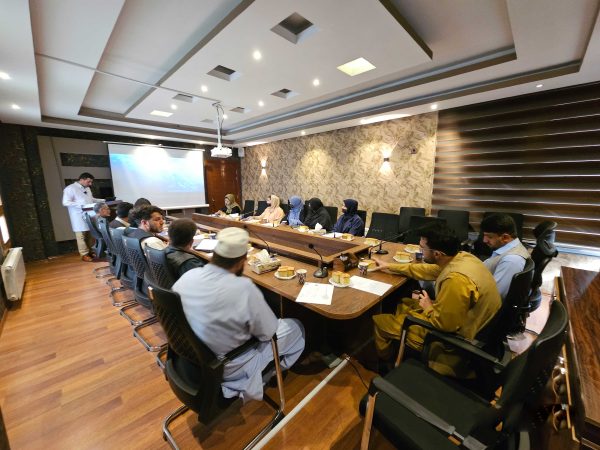
Theory stage of the course
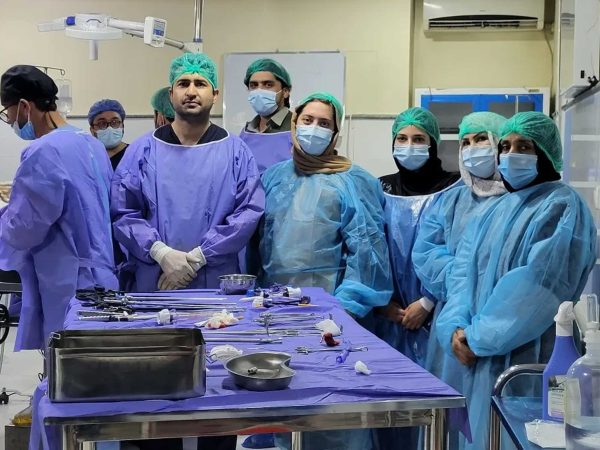
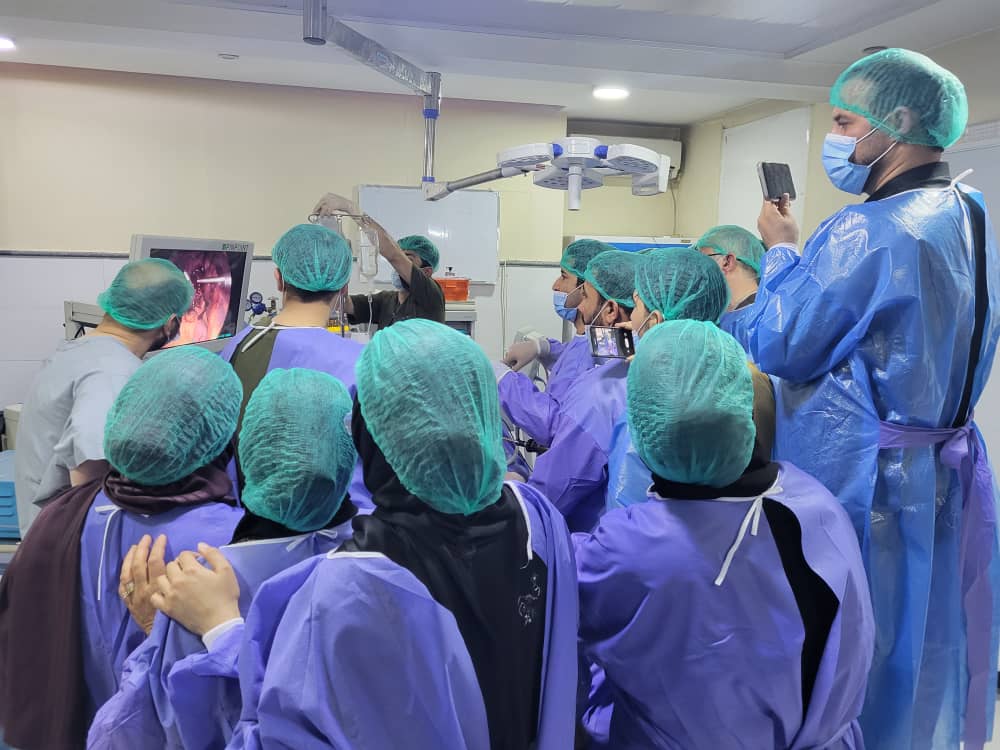
Operational stage of the course
Participation of all members of the course
Participation List
- Dr. Khatira Wafa
- Dr. Mohammad Nader Anush
- Dr. Razia Bahlol
- Dr. Sefatullah Momand
- Dr. Waleema Ayubi
- Dr. Mohammad Javed Noori
- Dr. Rohullah Mohammad Khil
- Dr. Bahram Hazrati
- Dr. Lal Mohammad Sohail